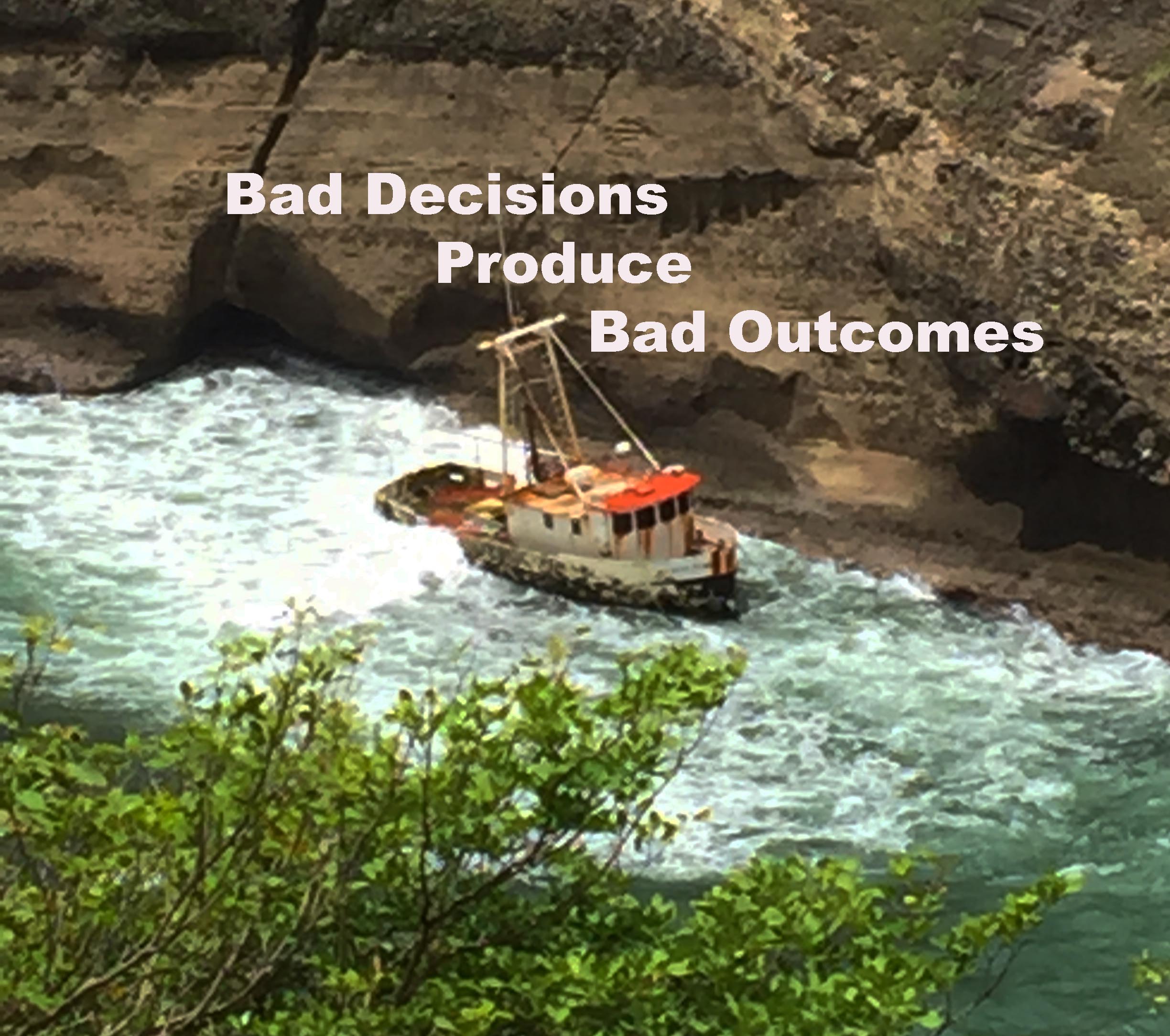
Why Smart Leaders Still Struggle to Act on Great Ideas

Some of us are doers. We have an idea and quickly execute it. We make it happen. We then make improvements as we go because it will never be perfect right out of the gate.
Some of us are dreamers. We have an idea and think about it.
And think some more. And even more.
And other ideas displace the previous idea. And we make improvements to that idea – continuously – in our minds.
Then one day, we lament that we once had a great idea. Or worse, we see that idea implemented by someone else, and we sigh regretfully that we let it fade or be adopted by someone else.
Why do some of us make things happen and others mull it in their heads until it dissipates?
Great ideas don’t usually die from lack of intelligence. They most often fade away or starve from over-indulgence of the 5 P’s: Paralysis, Procrastination, Perfectionism, Presumptuousness, and the Pleasure principle.
As leaders, it’s important that we recognize key traits in ourselves and those we lead that can keep us from making progress on some great ideas. Although they can be debilitating, we can learn to make progress despite them.
Here are concrete, practical strategies that are a consistent antidote to the 5 P’s and allow us to turn our ideas into reality.
Paralysis
No one wants to make the wrong decision. However, some of us allow a concern to metastasize into the fear of making the wrong decision. This fear can cause us to feel so overwhelmed that we become paralyzed with inaction.
Paralysis will usually set in when we consider the cost of failure or the consequences of a wrong decision. The smaller the decision, the less the impact of failure will be.
Therefore, the best path forward is to break up key decisions into bite-sized actions so each decision seems less impactful.
Here’s what I mean. After my first book was drafted, I had to decide whether to publish independently or go with a publisher.
I broke up that decision into steps. Each step ended with a smaller decision. My first bite-sized decision was to select five criteria I could use to evaluate traditional publishing or self-publishing. It took me a few minutes. And just like that, I felt excited that I made progress – because I did.
Antidote: Overcome paralysis by starting with smaller decisions that carry a lower risk of failure.
Procrastination
We procrastinate when we voluntarily delay important tasks, although we know there will be unpleasant consequences.
This drives us to lengthen the schedule before initiating a process or even after we start. We unnecessarily delay important tasks and inevitably allow the idea to die a slow death.
A critical hurdle for Procrastinators is to overcome the lofty goals we set.
Consider my second book writing project. My goal to write another book was lofty. However, I switched my focus to a smaller, more manageable goal of writing 500 words per day and was able to take action rather than delay.
Replace a lofty goal with small actions like writing an opening paragraph, listing 5 topics that could become chapters, and writing 100 words per day. These are small, actionable, and tangible enough to move a procrastinator to action.
Antidote: Avoid procrastination by breaking up your big goal into small actions and taking one step at a time.
Perfectionism
Some of us stay too long perfecting a brilliant idea before launching it. That’s a problem. That trait can suffocate an idea before it breathes life.
One of the best disruptions to perfectionism is constraints. Constraints place guardrails to help us stay within boundaries and force an endpoint. It prevents the perpetual treadmill action of improving the idea in our heads without actually moving forward.
Here’s an example of how I applied this principle in my book-writing projects. I had to learn not to edit my writing while I was creating my first draft, or else I would never have gotten the first chapter done.
I set a goal to complete a draft of 500 unedited words each day or 2000 unedited words each week. This kept me from making corrections and perfecting each line as I write. I coined the phrase, 78% done is better than 100% perfect because there will always be room for improvement.
Antidote: The solution to perfectionism is setting constraints such as deadlines, boundaries, and time limits.
Presumptuousness
This is overly confident in a way that ignores risks. When presumptuous, we don’t collect the right data. We act without making sure we are set up for success.
Hope and faith are good, but action should accompany them. The Bible reminds us in James 2:17 that faith without works is … you guessed it … dead.
This is one trait that can easily be confused with a good approach. It’s great to be optimistic and believe in the eventual success.
However, we must balance optimism with the reality of data. Why is that necessary? Perpetual optimism can have us barreling down the wrong path at breakneck speed with an idea while thinking we are on the right path. This happens when we don’t take the time to collect the necessary data, or we dismiss warning signs and ignore guardrails.
As an example, writing a book is a great idea, but we cannot presume that everyone will love our book babies, no matter how great we think they are.
Instead of assuming, seek to understand the value it brings to others. That can be done by sharing your partially completed work with trusted partners for honest feedback. This will help you avoid going down the wrong path and seeing your brilliant idea fall apart.
Antidote: Overcome perpetual optimism by balancing it with data.
Pleasure Principle
Humans generally want immediate results or instant gratification. We don’t like waiting for results that take time to come. The Pleasure Principle, a term from Sigmund Freud, is our instinctive drive from birth to seek instant gratification and avoid discomfort.
This is a trait that results in focusing on quick fixes rather than the highest priorities. It causes our decision-making to be biased towards what feels good and the less painful answers. Those with that trait tend to avoid making difficult decisions by postponing them and pushing back schedules.
Consequently, great ideas often fail to materialize into a finished product.
The pleasure principle requires robust systems to overcome the drive for quick fixes, delay important tasks, or avoid difficult decisions.
We can do that by instituting checks and balances. For example, we can have a trusted partner review our key decisions before we proceed, ensuring we approach the solutions with a clear mind. We can also implement an approval process by a coach to ensure the due diligence is being done.
Antidote: Intersect the pleasure principle with an unbiased review of the decision before final action.
It’s imperative we learn to recognize the 5 P’s: Paralysis, Procrastination, Perfectionism, Presumptuousness, and the Pleasure principle, in ourselves and those we coach. In that way, we can help manage these behaviors and have a better probability of great ideas progressing to a successful outcome.
There are lots of good intentions and great ideas in the graveyard because someone allowed one or more of the 5 P’s to choke the life out of them. Assess whether one of these is a blind spot for you. Take action to counter the behavior and watch your ideas make solid progress towards life.
Empowered Leader Reflection
Which one of the 5 P’s is most challenging for you, and how can you overcome it in your future idea evolution?
If this resonates with you, please share your thoughts with us below and share with others.
Photo Credit: Pexels.com